How to clean an oven without harsh chemicals
- by Josie Harfield
Oven cleaner is the reason most people have a bottle of something under the sink they're afraid to touch. The fumes, the gloves, the twenty-minute ventilation window, the yellow caution sticker — it's the most aggressive product in most kitchens, and it exists because oven grease is genuinely hard to shift.
It doesn't have to be that way. A plant-based cleaner, a bit of bicarb, and some patience will do the same job. It takes slightly longer. It smells like citrus instead of solvent. And your kitchen doesn't turn into a hazmat zone for the afternoon.
Here's how it's done.
Step 1: Clear the oven
Take out the shelves, the trays, the pizza stone if you have one — anything that isn't fixed to the oven itself. Soak them separately in the sink with hot water and a squeeze of washing-up liquid (or a spray of Foaming Washing-Up if you've got it). They can sit while you do the rest.
Step 2: Make a bicarb paste
Mix half a cup of bicarbonate of soda with a few tablespoons of water until it forms a thick, spreadable paste. Not runny; not crumbly. The consistency of icing.
Bicarb is the workhorse here — it's mildly alkaline, which breaks down grease, but it's food-safe, non-toxic, and won't strip enamel. It's what commercial oven cleaners try to be, minus the caustic soda.
Step 3 — Coat the inside of the oven
Wearing rubber gloves (bicarb is gentle but grease is filthy), spread the paste across the inside of the oven — walls, floor, roof, door. Avoid the heating element and the fan. Get into the corners; that's where most of the burnt-on grease hides.
Leave it. Overnight if you can, at least a few hours if you can't. The bicarb needs time to break down the grease.
Step 4 — Spray, wipe, repeat
The next morning, take a damp cloth and wipe off the bulk of the paste. It should come away brown — that's the grease it's lifted.
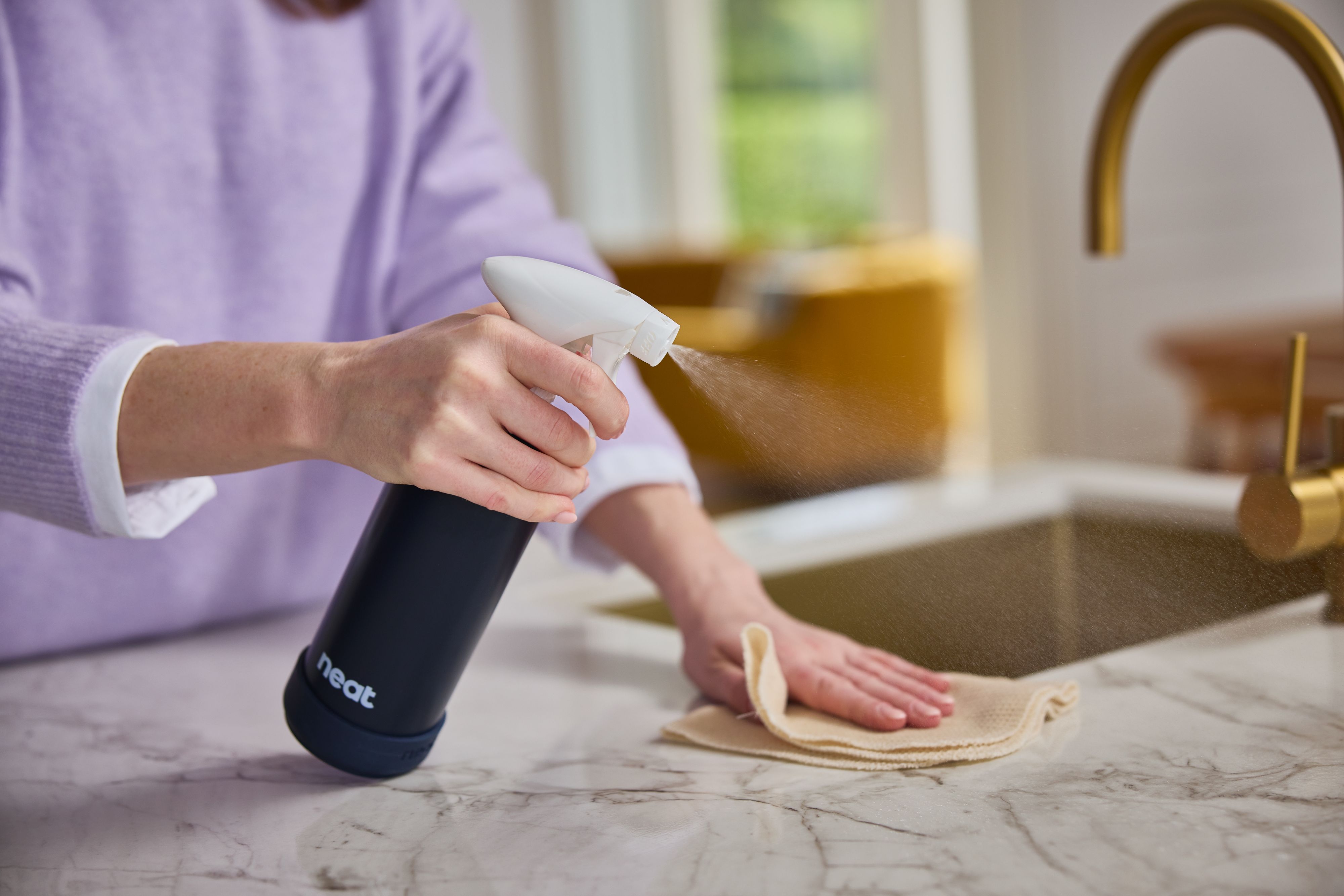
Now spray the whole inside with a plant-based multi-surface cleaner and wipe again. This is where a good spray earns its keep — you want something that cuts residual grease without bleach fumes in an enclosed space. A Neat Multi-Surface Refill will do the job (it's plant-based, kills 99.9% of bacteria, and doesn't leave a chemical film on food-contact surfaces). Wipe until the cloth comes away clean.
Step 5 — The glass door
The oven door is usually the worst-looking bit and the most satisfying to clean. Same method: bicarb paste, leave 30 minutes, wipe. If there are baked-on spots the paste doesn't lift, add a splash of white vinegar directly onto the paste — it'll fizz, which physically loosens the residue.
Step 6 — Put it all back
Rinse the shelves you soaked, dry them, slide them back in. Preheat the oven to 100°C for ten minutes to burn off any remaining moisture. You're done.
How often should you do this?
Once a quarter for most kitchens. Once a month if you cook a lot of roasted meat, or every time you have a major spill (better to tackle it while it's still soft than let it bake on).
Between deep cleans, wipe the oven down with a plant-based multi-surface spray once a week. It stops build-up before it becomes a project.
What to avoid
Traditional caustic oven cleaners work fast, but they contain sodium hydroxide (lye) — the same thing that unblocks drains. It'll strip grease and skin and enamel in equal measure. You don't need it.
Wire wool on enamel is worse — it scratches, and the scratches trap grease worse than smooth enamel does. Stick to microfibre or a non-scratch pad.
Steam cleaners are fine for maintenance but don't shift baked-on grease on their own. They're supplementary, not a replacement.
Frequently asked questions
Can I clean a self-cleaning oven this way?
You can, but you don't need to. Self-cleaning ovens run a high-heat cycle that incinerates residue — follow the manufacturer's instructions. Do use the bicarb method on the door glass and around the seal, which self-cleaning cycles don't reach.
Is bicarb safe on all oven interiors?
Yes for enamel, stainless steel and glass. Avoid using it on aluminium fittings inside the oven (it can dull the finish) and never on the heating element or fan.
How long does the paste need to sit?
Overnight is ideal. Minimum three to four hours. The longer bicarb sits on grease, the more of it breaks down before you wipe.
Do I need to rinse after using multi-surface spray inside the oven?
Wipe with a damp cloth after the spray. Then preheat the oven to 100°C for ten minutes to evaporate any moisture. No residue left.
Can I use vinegar and bicarb together?
Yes, but sparingly — they fizz, which is useful for loosening burnt-on spots but neutralises both quickly. Use vinegar as a follow-up, not mixed into the paste.