How to clean every surface in your kitchen: A guide
- by Josie Harfield
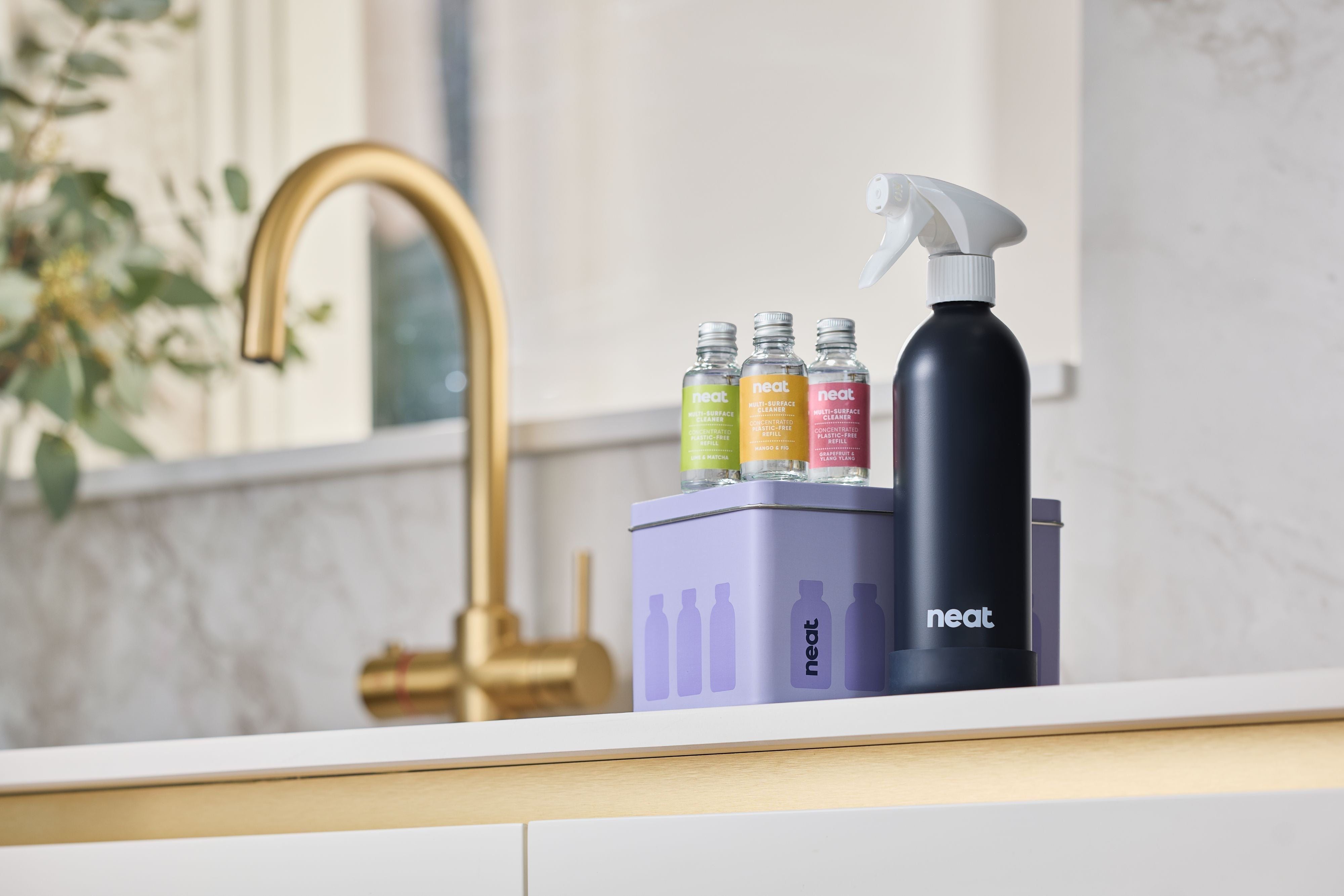
Kitchens have more surface types than any other room in a house. Wood, stainless steel, laminate, tile, glass, ceramic hobs, painted metal, silicone, sealed stone. Each behaves differently with cleaning products, and getting it wrong means dull finishes, sticky residues or damaged sealant.
This is a room-by-room walkthrough of what to use, what to avoid, and how often. It assumes a plant-based multi-surface spray as your default (a Neat Multi-Surface Refill works across most of what's below); anything that needs different treatment is called out specifically.
Worktops
Laminate and solid surface
Daily wipe with multi-surface spray. Weekly deep clean: same spray, longer dwell time (30 seconds before wiping) plus a scrub with a non-scratch pad on any stubborn spots.
Avoid abrasive powders (they scratch the finish and trap dirt) and bleach on darker laminates (can lighten the surface over time).
Wood (sealed)
Multi-surface spray works fine as long as the wood is sealed. Wipe with a damp cloth, not a sopping one — wood doesn't like standing water.
Every few months, apply food-safe wood butter or mineral oil to keep the sealant intact. This isn't cleaning; it's maintenance, but it's what stops wood worktops looking tired after two years.
Sealed stone (granite, quartz, marble)
Multi-surface spray is fine on sealed stone. Avoid vinegar, citric acid, lemon juice, any acidic cleaner — they etch the surface. Bleach can discolour.
If you're not sure whether your stone is sealed, drip a small amount of water on it. If it beads, sealed. If it soaks in, unsealed — treat with more caution and use only pH-neutral, plant-based cleaners.
Hobs
Ceramic and induction glass
Wipe down after every cooking session while still slightly warm (not hot). A plant-based multi-surface spray and a soft cloth handles daily. Once a month, use a dedicated ceramic hob cleaner or a bicarb paste on burnt-on residue.
Never use metal scrapers or abrasive pads — they scratch. Dedicated glass hob scrapers (blade at 45°) are fine for burnt-on spots and won't damage the surface.

Gas hob (enamel + burners)
Remove burner caps, grates and pan supports weekly. Soak in hot soapy water for 20 minutes, scrub with a non-scratch pad, rinse and dry before putting back. The enamel surface underneath: spray, dwell 30 seconds, wipe.
Around burner rings, use an old toothbrush to reach into grooves. Grease bakes in fast on gas hobs; frequent light cleaning saves major project time later.
Splashback
Depends on the material — tile, glass, stainless, acrylic. Glass and tile: multi-surface spray, wipe, buff dry with microfibre for streak-free finish. Stainless steel: wipe with the grain, use a dedicated stainless polish once a month for the show finish (a light oil on a soft cloth also works).
Sink
Stainless steel
Rinse and wipe after every use. Once a week, sprinkle bicarb around the basin, spray white vinegar over it — it'll fizz, which lifts grease and mineral spots. Rinse well.
Don't leave metal pots and pans sitting in a stainless sink overnight. The residue can pit the finish.
Ceramic
Multi-surface spray for daily. Bicarb paste for stubborn tea and coffee stains — apply, leave five minutes, scrub with a non-scratch pad, rinse.
Composite (Blanco, Franke, etc.)
Follow manufacturer guidance. Most composite sinks tolerate mild plant-based cleaners but hate bleach, citric acid and abrasives. When in doubt: warm water, soap, soft cloth.
Extractor hood
The filter is the priority — it's the bit that gets greasy fastest and reduces hood performance dramatically when clogged.
1. Every 2–3 months, remove the metal mesh filter.
2. Soak in hot water with washing-up liquid or a good foaming washing-up spray for 20–30 minutes.
3. Scrub with a stiff (non-metal) brush.
4. Rinse, dry, replace.
The hood surface: multi-surface spray weekly. Grease films quickly on the underside — catch it early.
Fridge
Inside
Every 4–6 weeks, empty a shelf at a time (easier than the whole thing at once), remove, wash in warm soapy water, dry, replace. Spray a plant-based multi-surface cleaner on the interior walls, wipe, dry.
Avoid strong-fragrance cleaners inside a fridge — the smell can transfer to food. Use a mild, unfragranced spray if you have one.
Bicarb in an open container on the top shelf absorbs odours between deep cleans. Replace monthly.
Outside
Stainless steel: as above (wipe with the grain). Painted metal: multi-surface spray, gentle wipe. Don't use abrasives on any external finish.
Bins and floors
Bin inside: rinse weekly with warm soapy water, spray with anti-bac multi-surface, let sit for a minute, wipe out. Line with a good-fit bag to reduce leaks.
Floor: sweep first, then mop. A plant-based floor cleaner in warm water, wrung out well — floors don't like standing water. Once a month, drag out anything you can (bin, chair legs, freestanding units) and mop the spots you usually skip.
A realistic schedule
• Daily: wipe worktops after cooking, wipe hob after use, rinse sink.
• Weekly: deep clean hob, worktops, sink, splashback, external appliance surfaces, mop floor.
• Monthly: deep clean inside fridge (one shelf a week), descale kettle, clean extractor filter (every 2–3 months).
• Quarterly: deep clean oven (see the dedicated guide), inside cabinets, behind appliances.
Frequently asked questions
Can I use the same spray on all these surfaces?
For most: yes. A plant-based multi-surface spray is safe on sealed stone, wood, laminate, glass, tile, stainless steel and painted surfaces. Specific exceptions are unsealed stone (needs pH-neutral only), ceramic hobs (need dedicated glass hob cleaner for baked-on residue), and composite sinks (check manufacturer).
How often should I really clean the fridge inside?
Every 4–6 weeks for a light clean; every 3 months for a deep clean including removing all shelves. Between: wipe up spills as they happen — they get harder to remove once dried.
What's the best cloth for kitchens?
Microfibre. It picks up more dirt than cotton, dries faster, doesn't smear glass. Have separate cloths for hob, worktops, and sink to avoid cross-contamination. Wash at 60°C weekly..
Are anti-bac sprays safe on food contact surfaces?
Yes when used as directed — spray, wipe, and rinse the surface with clean water before food prep. All EN-tested anti-bac formulas are designed for kitchen use.
Do I need separate products for kitchen vs bathroom?
Not strictly. A good multi-surface spray works in both. But dedicated products (bathroom spray, daily shower spray) are formulated for specific challenges — soap scum in the bathroom, grease in the kitchen — and perform slightly better than a general-purpose spray.